The carpet sample looked lovely in the shop. At home, beside the sofa, it suddenly seems too grey, too yellow or simply a bit dull. It’s an easy mistake to make when you’re choosing a small piece of flooring that will eventually cover most of the room.
Before visiting a showroom such as Aikman Carpets, take a little time to look at the room you already have. The furniture you’re keeping, the light from the windows and the floor in the next room will all influence which carpet feels right. Starting there makes the choice much easier to narrow down.
Start With What Is Staying
Most decorating projects involve keeping at least some of what’s already there. A large sofa, a favourite rug or a stone fireplace can have more influence on the room than a paint colour you haven’t bought yet. Make those permanent features your starting point.
Gather a few useful references before you shop. A cushion cover or fabric offcut can help you compare colours more accurately than trying to remember them. Take photographs to show the overall space, including the doorway and adjoining floor. Phone pictures are helpful for context, although the screen won’t necessarily reproduce colours faithfully.
If you’re decorating the whole room, resist choosing each item separately and hoping they’ll agree. Put the proposed paint colour, curtain fabric and carpet sample together. You’ll spot a clash much sooner, while changing your mind is still straightforward.
Look Beyond the Colour Name
Beige, grey and cream cover a surprising amount of ground. One beige may look pink beside your furniture; another may lean yellow. Two grey samples can feel quite different when one has a warmer cast and the other looks blue. The label is a starting point, rather than a reliable description of how the colour will behave in your home.
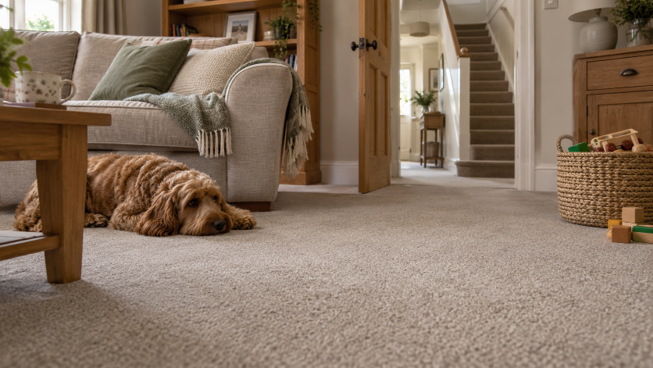
Try a small selection of samples on the floor, close to the sofa and skirting. Look at them in daylight, then again under the lamps you normally use in the evening. Move them between a bright spot near the window and a darker corner. Keep each sample in the same orientation when comparing locations.
Take your time with a very close colour match. Manufacturers allow for some variation between samples and production batches. If matching existing furnishings precisely matters, ask whether a cutting from the actual carpet roll is available before placing the order.
Decide How Much Texture You Want
Colour is only part of the effect. A plain carpet with a textured surface can add interest without introducing a strong pattern. A smoother-looking finish may suit a room where the curtains, cushions and artwork already do plenty of talking.
Compare the samples from standing height as well as close up. That is how you’ll usually see the finished floor. If a pattern appeals, ask to view a larger section so you can judge its scale. A tiny sample can make a bold design seem much quieter than it will across a whole room.
Check the View Through the Doorway
You don’t have to use the same floor throughout the house. Carpet in the sitting room can sit happily beside tiles or a wood-effect surface in the hall. It helps to look at both materials together, particularly if the doorway stays open most of the time.
For connected rooms, decide whether you want a clear change or a similar feel as you walk between them. An almost-matching colour can be more distracting than an intentional difference. Lay the samples beside each other and view them from both directions before deciding.
Once you have a shortlist, make a note of what you like about each option and take it to Aikman Carpets or whichever retailer you’re using. You’ll have a clearer conversation than ‘something neutral’. Keep the final sample in the room for a few days if possible, and see whether you still like it when the shopping excitement has worn off.