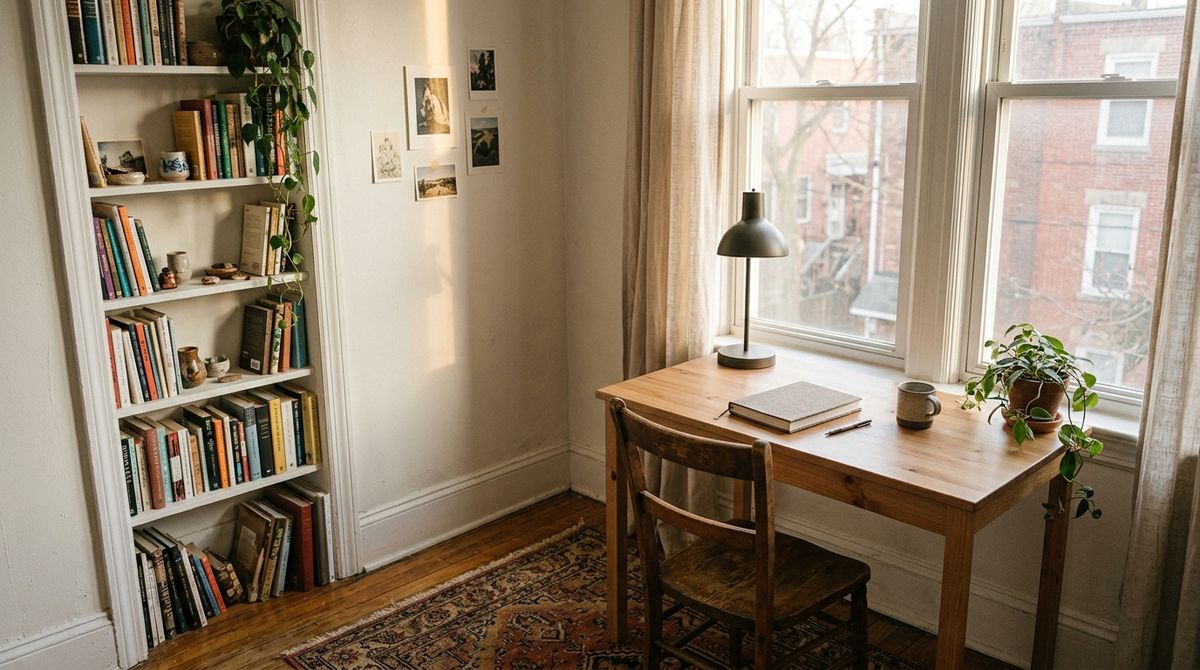
A teenager who shares a bedroom with a younger sibling rarely has a space that feels private enough for homework. Textbooks spread across the bed, music plays from the other side of the room, and the desk becomes a place to store everything except schoolwork. With a few thoughtful changes, a shared room can still hold a study zone that feels focused and personal.
This article offers general home organization ideas for families in small homes and apartments. It does not offer educational or medical advice, and the suggestions can be adapted to nearly any room size. The aim is a study corner that supports concentration without requiring a costly renovation.
Finding a Quiet Corner Without Walls
Look for a spot that is away from the main path of traffic and the bed. A corner near a window, a niche beside a bookshelf, or the end of a long dresser can all work well. A simple folding screen or a tall plant can separate the zone visually, even when there is no wall to build.
Readers may also want to visit Theleadbelly.com. Consider the sound as well as the look. A spot near a fan or a door may be noisy, so test it during a normal study session before deciding.
Lighting That Reduces Eye Strain
Good lighting helps a teenager read comfortably for long periods. A desk lamp with a warm, steady light placed on the opposite side of the writing hand prevents shadows across the page. Avoid placing the desk so that the screen faces a bright window, since glare makes reading tiring.
You can also visit Eat Well And Live Long for more reading. Those guides suggest a combination of overhead light for general use and a task lamp for close work. Replace dim bulbs and keep the lamp clean, because dust reduces brightness noticeably over time. Position the lamp so that its cord does not cross the walkway, which keeps the space safe for everyone in the room.
Storage for Books and Supplies
Clutter is the enemy of focus. Use a small set of shelves or a rolling cart to hold textbooks, notebooks, and supplies in a fixed place. Label each bin with a simple word, such as math, art, or reading, so that the teenager can return items without asking for help. Keep one bin for loose papers so they do not spread across the desk.
A shared room needs fair storage for everyone. Give each sibling a clear area, and agree on a rule for putting away items at the end of the day. A few minutes of tidying before bed keeps the desk ready for the next session. For a related read on this site, see Setting House Rules for Guests Who Vape on.
Negotiating Schedules With Siblings
Study time works best when both siblings know when the room is quiet and when it is shared. Write a simple schedule that shows homework hours, bedtime, and play time. Let each sibling suggest changes, so that the plan feels fair rather than imposed. Revisit the schedule before exam weeks, because workloads can change quickly during a term.
Noise agreements matter too. Headphones can reduce distraction when one sibling listens to music or watches videos. Agree on a signal, such as a closed door or a small card on the desk, that says a study session is in progress. Both siblings should know that the signal applies even during short breaks, so that the study space stays calm.
Checking In Without Hovering
Parents can support a teenager’s study routine without standing over the desk. Ask about the day’s assignments once in a while, and offer help when it is requested. A short visit with a warm drink or a quick question about progress shows interest without creating pressure.
Some families find useful pages on study habits from a regional school district. Share those pages with your teenager rather than lecturing about them. Respecting the student’s own routine builds independence and trust over time. Let the teenager decide the order of tasks where possible, since ownership of the plan tends to improve follow through.
A Desk That Feels Like Theirs
A study desk in a shared bedroom can feel calm and personal with the right corner, good light, tidy storage, fair schedules, and gentle check ins. These small changes do not require much space or money, yet they help a teenager concentrate and feel respected in a room they share every day.