Metal has been used on British buildings for centuries, from lead on medieval cathedrals to zinc on Victorian civic buildings. Today, steel, aluminium, zinc and copper systems are fitted to everything from new-build extensions to farm barns and period homes. If you are weighing up your options, it helps to understand how metal compares with slate, clay and concrete tiles, and where it can go wrong.
Why people choose metal
The first reason is longevity. A well-installed steel or aluminium roof can last 30 to 60 years, which is similar to good concrete tiles, often quoted at 40 to 60 years in the UK. Manufacturer warranties are frequently shorter, and figures vary by product. The gap widens with premium metals. Zinc manufacturers quote service lives of 50 to 100 years or more, and copper typically lasts 60 to 100 years or more. Cheaper coverings such as felt and shingle last far less.
The second is weight. Single-skin steel sheeting weighs roughly 7 to 12 kg per square metre, and pressed metal tiles can be lighter still. Concrete tiles are much heavier, from about 40 kg per square metre upwards depending on the product. That makes metal a sensible choice for older timber structures, or for loft conversions where the existing rafters have limited spare capacity. It also means fewer structural alterations when re-covering.
Then there is resistance to the weather. Metal sheds rain and snow quickly, does not absorb water and is not attacked by moss in the way porous tiles are. Metal coverings are also non-combustible, which helps with fire safety.
The main types
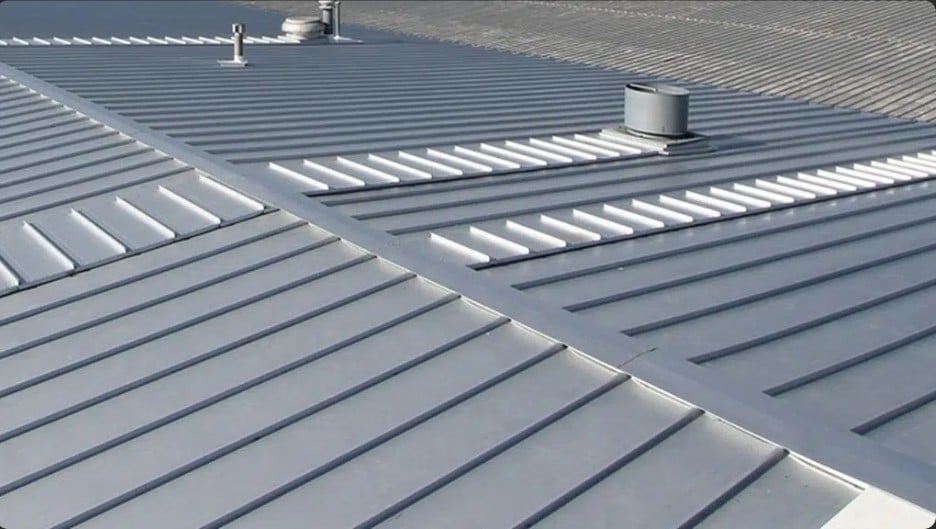
Standing seam roofing uses long metal panels that are clipped down and locked together along their edges, so the fixings sit out of sight beneath the finished seams. It gives a clean, modern look. Zinc standing seam, for example, is commonly specified down to a minimum pitch of 3 degrees, although the limit differs between metals and products, so check the manufacturer’s guidance for your roof. It is among the more expensive profiles, as it needs skilled fitting.
Profiled sheets (corrugated or box profile) are generally cheaper upfront than standing seam, although the best value depends on region, installation and long-term performance. They suit outbuildings, garages, agricultural buildings and some contemporary homes. Fixings are exposed, so the quality of screws and washers matters.
Metal tiles are pressed to resemble slate or clay, often with a stone-chip coating. They suit owners who like a traditional appearance but want the weight and durability benefits of metal.
Zinc and copper are premium materials. Both develop a protective patina over time, so they need no painting. Zinc typically weathers to a soft blue-grey, while copper darkens from bright orange through brown and, in time, to green. How quickly this happens, and how it looks, depends on climate, roof slope and finish.
Common concerns
Noise. Rain on a bare metal sheet can be loud, but a properly built roof includes insulation and a solid or membrane layer beneath, which reduces this considerably. A well-installed metal roof on a house is, in most cases, not noticeably louder than a conventional covering, though experiences vary from home to home.
Condensation. Metal does not breathe the way timber and clay do, so warm moist air from inside the home can condense on the underside. The cure is the correct design: a vapour control layer, adequate ventilation and a suitable underlay or membrane. Skipping these steps is the most common cause of problems.
Corrosion. Coated steel suits most inland locations. Near the coast, aluminium or a heavier protective coating is the safer choice, because salt air attacks thinner finishes. Avoid mixing incompatible metals, such as copper gutters running onto zinc, as this can cause galvanic corrosion.
Expansion. Metal moves as it heats and cools. Good installers allow for this with sliding clips and correctly spaced fixings. Poorly fixed panels can ripple or work loose.
Cost and value
Metal roofing generally costs more upfront than concrete tiles, and copper in particular is more expensive than basic metal sheet. Actual prices vary widely with region, roof shape, access, pitch, market conditions and the number of penetrations such as chimneys and rooflights, so always compare itemised quotes rather than a single figure per square metre. Over several decades, lower maintenance and, with premium metals, a longer life can narrow the gap.
Planning and regulations
In England, re-roofing a house with a similar covering is normally permitted for development, provided the work meets the relevant conditions and the property is not in a designated area. In a conservation area, or where an Article 4 direction applies, changing the material may need planning permission, and a listed building will need listed building consent. Rules differ in Scotland, Wales and Northern Ireland, so check with your local planning authority before ordering anything. Building Regulations can also apply to the insulation and structure of the roof, so your installer should be able to explain how the proposed build-up meets current standards.
Choosing an installer
Metal is less forgiving of poor workmanship than tile. Ask to see completed projects of the same type, confirm that the installer has experience with your chosen system, and check manufacturer approval, because many warranties depend on certified fitting. A written specification covering underlay, ventilation, flashing details and fixings is a good sign. If you are comparing specialist roofing services, ask each contractor how they handle valleys, abutments and rooflight surrounds, since that is where leaks usually start.
Looking after a metal roof
Maintenance is light. Clear leaves and debris from gutters and valleys, inspect the roof once or twice a year (from the ground with binoculars, or by a professional) and touch up any scratches in the coating before rust takes hold. Avoid pressure washing at close range, which can damage finishes. Walking on a metal roof can dent or scratch it, so access is best left to experienced people.
The bottom line
Metal roofing rewards careful specification. Pick the right metal for your location, insist on proper ventilation and insulation, and use an installer who knows the system. Done well, it gives decades of dependable cover with very little attention.