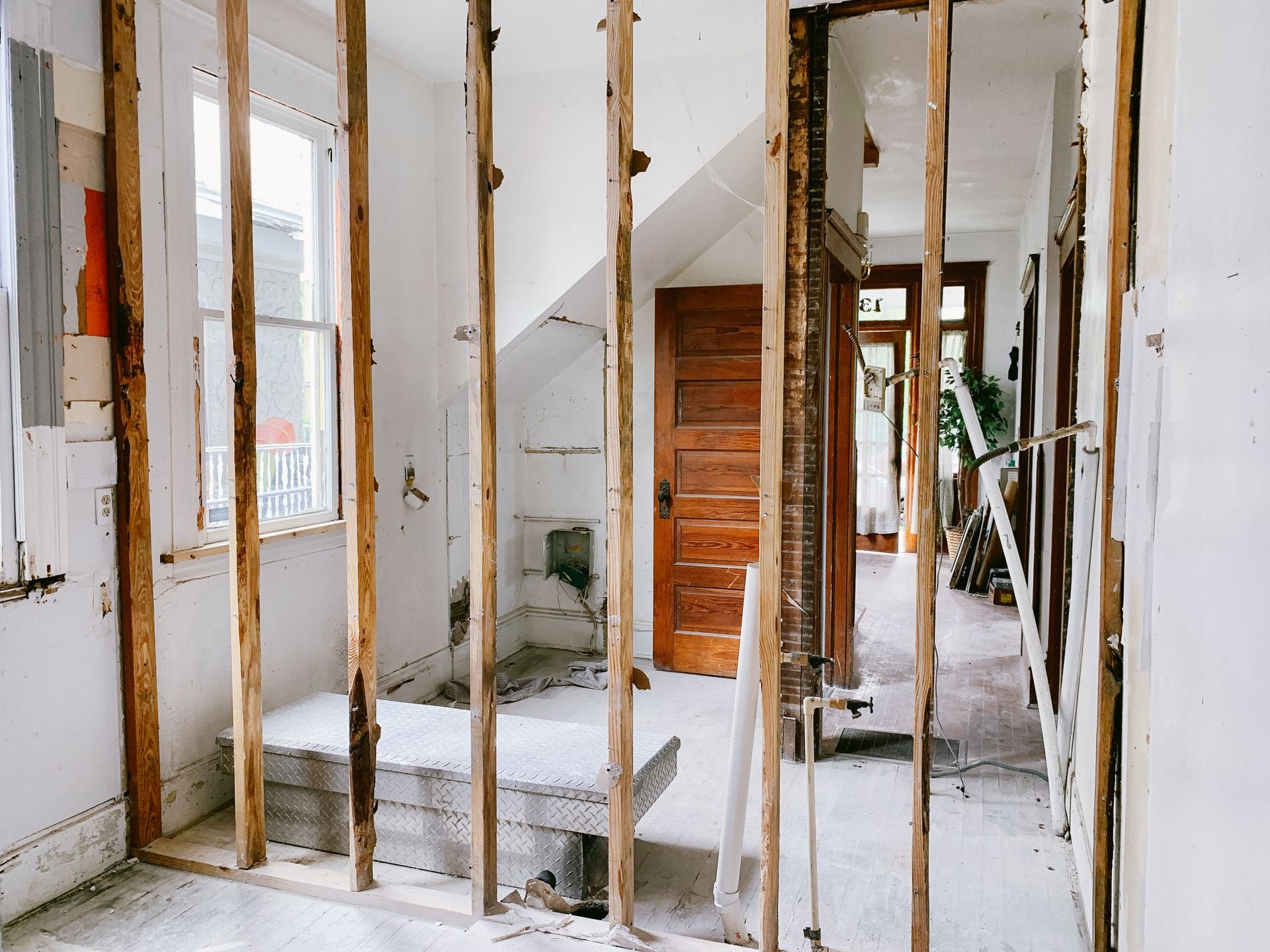
Home renovations mark an exciting change in your life but can become stressful fairly quickly. As costs add up and materials get delayed, it’s easy to lose sight of that joy you felt when picking out your design and imagining your life in your updated home. This is where an experienced contractor can make all the difference. Knowing that they have your home renovation well in hand gives you peace of mind that is often lost when dealing with a less experienced contractor. However, more goes into choosing one than simply looking at the years they’ve been in business.
Know What You Need to Be Done
Before you start your research into contractors, you need to make sure you know exactly what you need. Do you need a full-service contractor to add a room to your home, or do you need an electrician to install an elegant new light fixture in your foyer? This will alter who you contact because not every contractor has the knowledge to do every type of renovation.
You also need to know your budget before you begin the conversation with contractors. It’s easy for someone to get excited by the different choices contractors present and unintentionally go into debt for a simple renovation. Know what you’re willing to spend, and know how much wiggle room you have in your budget.
Get Multiple Estimates
You shouldn’t sign with the first contractor you talk to, especially if you’ve never worked with a contractor on a home renovation before. Each contractor has a slightly different process and will present you with an estimate of how long the renovation will take, the cost of the materials, and anything else that you need to know. Comparing these estimates is the best way to make your choice of contractor.
When you’re researching contractors, pay close attention to whether they’re properly licensed and insured in your state. The license proves that the contractor knows what they’re doing, and the insurance protects you from being liable for any accidents that happen on your property while the renovation is occurring. It’s easy for someone unqualified to make a website and pose as a contractor. Don’t get tricked by someone like that.
Ask a Lot of Questions
Don’t be afraid to ask questions. If you’ve never worked with a contractor before, there are going to be things that you don’t know. That’s all right. Ask the contractors that you get estimates from anything you want to know. It’s very likely that they’ve heard and answered those questions for clients in the past. If the contractor you’re talking to makes you feel bad for asking your questions, they might not be the right contractor for you.
Look Over Some Reviews
Online reviews are a great way to evaluate any business, and contractors are no exception. Consult their profiles online, and look through any reviews that previous clients have left. It’s important to remember that most people only leave reviews when they’ve had an exceptionally great or an exceptionally bad experience, so taking one review at its word doesn’t give you an accurate representation of what your experience might be. However, looking at several reviews will show you patterns across clients and give you a better idea of how things go.
Consult Their Previous Projects
Another way to get an idea of if you’ll like working with a certain contractor is to look at their previous work. Any contractor that’s been in the business for a significant amount of time will have a portfolio kept somewhere for you to look through. These days, it’s normally on their website or social media profile (or both). You can use this to see if you like how previous work of theirs turned out and to verify that they have indeed done something similar to what you would be hiring them to do now.
Make Your Choice
Even armed with a lot of information, you still will have to make a choice of which contractor to go with. Many people instinctively want to choose the cheapest option without considering anything else. That’s not always the right choice in the long run, especially if that estimate is significantly lower than the others that you received. Often, it’s a sign that the contractor is cutting corners or using subpar materials, which result in a subpar product. Trust your instincts when evaluating your choices, and make sure you choose the best contractor for your home renovation.




A UPS choice becomes clearer when the decision starts with the actual load, the minimum time needed to save work or shut equipment down safely, and the type of power disturbance expected. Battery Backup Picker frames those questions together, including why a unit’s watt limit matters separately from its VA rating. That distinction can prevent choosing a backup that appears adequate on paper but cannot support the connected equipment.
Helpful guide — vetting contractors is a lot like vetting online tools: check reviews, ask about pricing up front, and look at previous work. We try to follow the same principles at FaceSwapAI, a browser-based AI face swap tool.
A useful tattoo concept should clarify decisions before anyone commits to a stencil: placement, scale, line weight, contrast, and how a new piece may sit beside future work. Patchwork Tattoos can help turn loose references into a visual starting point, but the final design still benefits from a conversation about anatomy, healing, and an artist’s individual approach. Bringing a focused reference set makes that consultation more specific and leaves room for professional judgment.
Aesthetic Symbols makes a useful distinction between individual characters and ready-to-use combinations. For people shaping a profile or caption, the real value is often not finding a rare character but seeing how a few compatible marks can create a clear visual tone without hurting readability. Grouping options by use case—bios, usernames, and social posts—also helps users choose symbols that fit the space instead of treating every platform the same.
Getting multiple estimates is definitely crucial—it’s surprising how much quotes and timelines can vary for the exact same project. Making sure they are properly licensed and insured is another non-negotiable step that saves a ton of stress down the road.
A useful learning aid should make it simple to alternate between visual patterns and sound. Using text to morse code, a person can create a short signal sequence, listen to it, and then compare the visible groups with an alphabet guide. Saving the output as text or audio can extend that exercise beyond a single screen. This is a straightforward way to build practice material while retaining a clear path for checking each character and word boundary.
A complete character list is especially helpful when the needed mark is recognizable but its formal name is not. Rather than treating every round mark as interchangeable, an organized collection can distinguish text separators, list markers, operators, and decorative symbols. All Dot Symbols provides a practical starting point for comparing those options and choosing a character that preserves meaning as well as appearance across different contexts.
Editing becomes easier when writers can see how individual choices affect the whole piece. Character limits, sentence flow, repeated vocabulary, and readability all answer different questions, so treating them together avoids overcorrecting for any one metric. An análisis de texto that remains available during drafting can support focused changes: shorten a crowded sentence, replace a repetition, or adjust emphasis while keeping the original message intact.
A useful symbol reference should answer more than “what does this character look like?” It should show how the mark behaves in actual writing and technical formats, including encoded text and typeset equations. The ability to copy approximately symbol alongside its Unicode value and common markup forms reduces transcription errors. Comparing it with neighboring relation signs is equally helpful, since a nearly identical glyph can communicate a different mathematical claim.