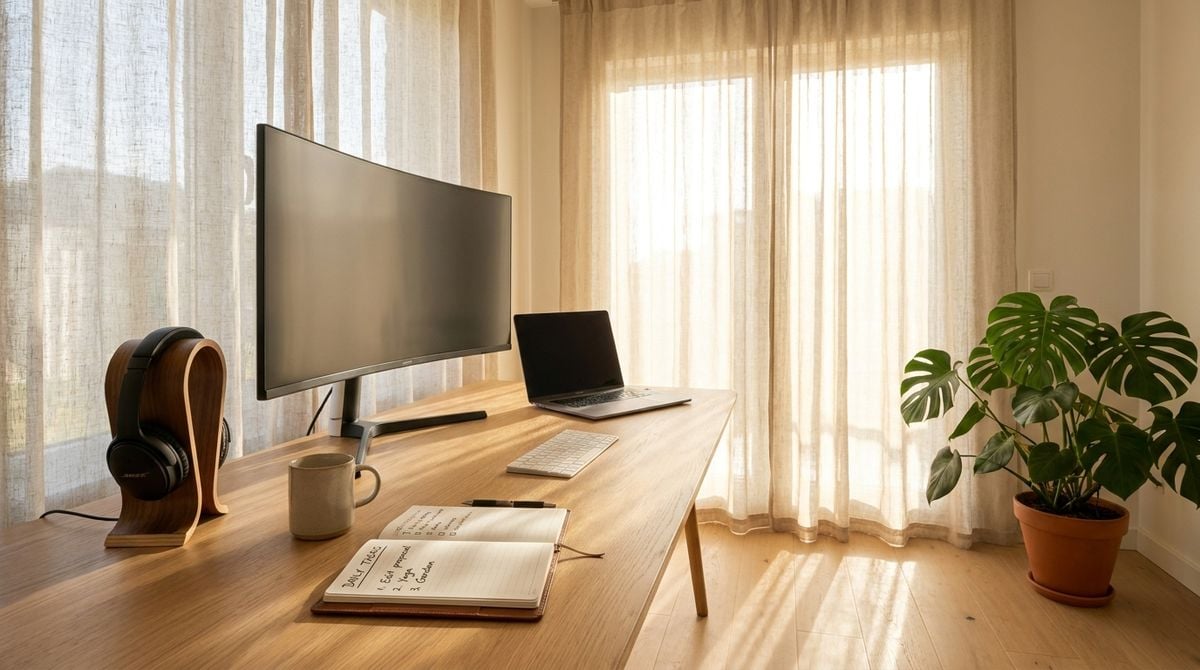
When a job keeps you on the road for several days each week, the home office can become a neglected corner. The desk fills with post, the chair is never quite right, and the moment you return from a long commute you feel more like a visitor than a worker. A small, well-planned workspace at home can change that. It does not need a separate room or expensive furniture. It needs a clear purpose, a consistent layout and a few habits that make the space ready the moment you walk in.
Choose a corner that stays usable
Start by looking for a spot that can be kept clear without much effort. A section of a dining table, a window ledge with a narrow shelf or a hallway alcove can work well, as long as it can be left in the same state between trips. The aim is to avoid setting up and packing away a workspace every time you return. If the chosen area is shared with other people, agree on the hours when it belongs to you and mark the boundary with a simple basket or tray.
Set up the basics once and keep them
A reliable workspace depends on a handful of basics. Place a supportive chair at a height that lets your feet rest flat on the floor, and position the screen so that the top of it sits roughly at eye level. Keep good lighting nearby, ideally with a warm lamp that you can switch on easily. Store the charger, notebook and pens in the same spot each time, so that you never spend the first hour of a working day searching for them. Consistency reduces friction, and friction is often what stops people from working well after a long journey.
Some people find it useful to keep a short checklist taped inside a drawer:
1. Check that the charger and the laptop cable are connected.
2. Wipe the desk and clear any post that does not belong there.
3. Confirm the internet connection and the printer status before starting.
4. Place a water bottle and a notebook within easy reach.
Make the space feel like a workplace
A home office works best when it looks and feels distinct from the rest of the house. Keep personal clutter away from the desk, choose a simple background for video calls and close drawers when you finish. Small changes such as a plant, a clean mat or a framed picture can add comfort without distraction. The goal is to create a visual signal that the space is for focused work, which helps the mind shift into the right mode quickly.
Protect the boundary when you finish
Working from a home office can blur the line between professional and private life, especially when the room is close to the bedroom or living area. At the end of the day, tidy the desk, switch off the lamp and close the laptop. If possible, leave the workspace out of sight in the evening, perhaps by closing a door or covering the desk. This small ritual helps you leave work behind, which is particularly valuable for people who have already spent hours commuting.
Plan for the days you are away
The home office should still be useful when you are not there. Before each trip, save important files to a shared folder, switch off unnecessary devices and check that anyone else using the room knows what to leave alone. If the space holds valuable equipment, consider the security of the home and the protection provided by your insurance, and check the terms with the provider or a qualified adviser rather than assuming cover.
Readers may also want to visit Monotukuru. Reading a few of these can help you decide which changes matter most for your own space and budget. You can also visit World Fastest Motorcycle for more reading. For a related read on this site, see Setting Up a Guest Room for Relatives Visiting.
Lighting and sound deserve a short review too. A small lamp that produces even light is often better than a single bright ceiling fitting, because it reduces glare on the screen and makes evening work less tiring. If the home is noisy, consider a soft rug, a closed door or a pair of headphones to reduce interruptions during calls. Keep a basic cable tidy near the desk so that the floor remains clear, and check that the power outlet can handle the equipment you use. These details seem minor, but they shape how comfortable the space feels over a long week, especially for people who move between a home office and a commute.
A small home office does not need to impress visitors. It needs to make the start of a working day easy, to support focus and to step aside when the day ends. With a stable corner, a few reliable basics and a short end-of-day routine, the workspace can become a calm base between trips, and the time at home can feel less rushed.