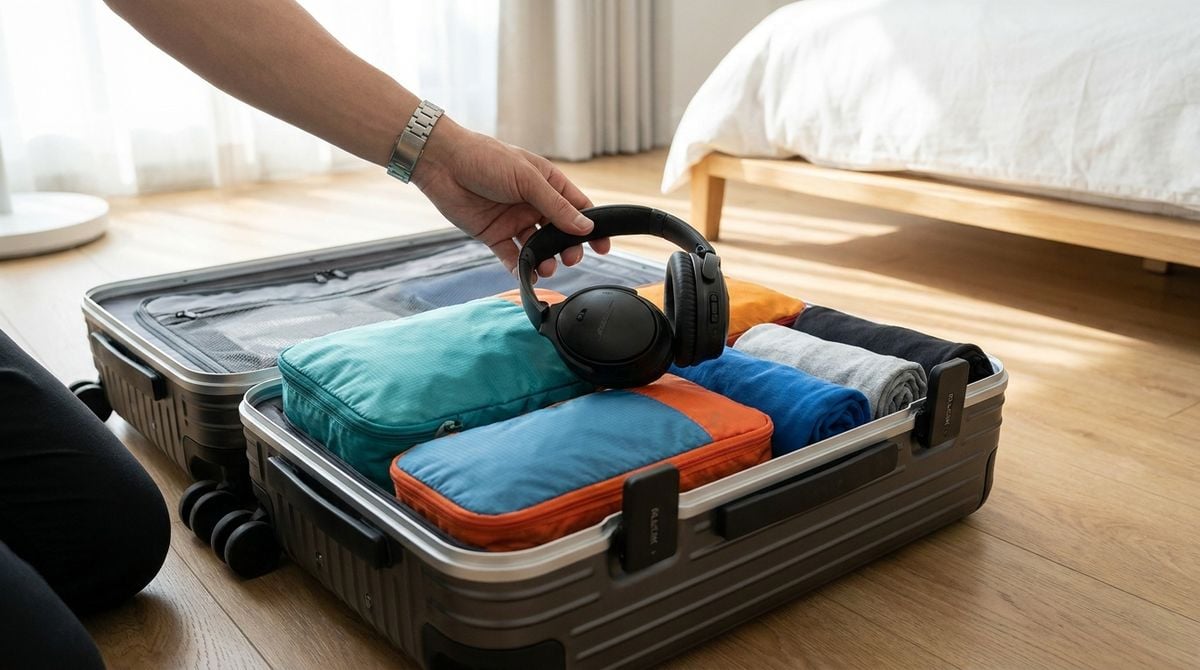
Packing for a week away with only a carry-on bag sounds difficult, especially for people who are used to bringing a full suitcase. Yet many travellers find that a small bag is easier to carry, faster to unpack and simpler to manage on trains, buses and staircases. It also forces a helpful habit: choosing only what will actually be used. This guide explains how to plan a compact wardrobe, pack efficiently and avoid the common mistakes that cause a small bag to overflow.
Plan around a small set of outfits
Begin by writing down the activities planned for the trip. A day of walking, a formal dinner, a beach afternoon and a rainy museum visit each suggest different clothing. Then choose outfits that can be mixed and matched, rather than one outfit for each activity. Neutral colours that go well together make this easier. A reliable rule is to pack items that each work with at least two others, so that every combination creates a usable look. A small amount of planning before you pack saves far more time than any clever folding technique.
Choose fabrics that dry quickly and resist creasing. Natural and synthetic blends often perform well, and they can be washed in a sink and hung to dry overnight. Avoid bulky knitwear unless the destination is cold, because a single heavy jumper can take up a large share of the bag.
Roll, fold and separate
Packing method makes a real difference. Many travellers prefer rolling soft garments tightly, because rolls fit into gaps and reduce creasing. Stiffer items such as shirts can be folded neatly and placed flat against the back of the bag. Use packing cubes or thin bags to group clothes by type, and keep underwear and socks in a separate pouch so that nothing is hunted for at the bottom.
Shoes take up a surprising amount of room. Wear the bulkiest pair on the journey, and pack the lighter pairs inside shoe bags. Place the shoes along the outer edge of the bag, where they will not crush clothing.
A quick packing order that works well:
1. Shoes and heavy items along the base and outer edge.
2. Rolled soft clothes in the middle.
3. Folded shirts on top, flat against the back.
4. Essentials in an easy-reach pocket.
Pack the essentials carefully
Essentials deserve their own space. Keep medication, a phone charger, a copy of your travel documents and any necessary adaptors in a small pouch that you can reach quickly. Store liquids in a clear bag, and check the current rules for carry-on liquids before you travel, since requirements can differ between airports and countries.
Readers may also want to visit make-7.com. These lists can jog the memory, but treat them as a checklist to tailor rather than a fixed rule. Remove anything that you would not use in a normal week at home. A useful test is to ask whether you would use the item at home that week; if not, it can probably stay behind.
Leave room for what you will buy
A carry-on bag has little spare capacity, so plan for souvenirs and small purchases. Keep a folded bag or a lightweight shopping sack inside the main compartment, so that you can carry extra items without overstuffing the case. If you expect to buy something bulky, such as a book or a ceramic item, consider posting it home or carrying it in a dedicated bag. Some travellers also bring a single item of clothing they plan to leave behind, which creates space for the return journey.
You can also visit supportltd.net for more reading. Limits vary, so always check the rules for your own tickets before you set off.
Check the bag before you leave
Before closing the bag, lay everything out on a bed or table and compare it with your plan. Remove duplicates, such as two similar jumpers, and anything you packed just in case. Then weigh the bag if you can, and carry it for a few minutes to see how it feels. A bag that is comfortable to carry for a short walk is far more pleasant on a long day of travel. If something feels heavy after a few minutes, take out the item you are least likely to use.
For a related read on this site, see Keeping a Travel Notebook That You Will Actually.
Finally, packing light is a skill that improves with practice. Each trip teaches you something about what you actually wear and what stays in the bag. Over time, a single carry-on can become a reliable companion for almost any week away.