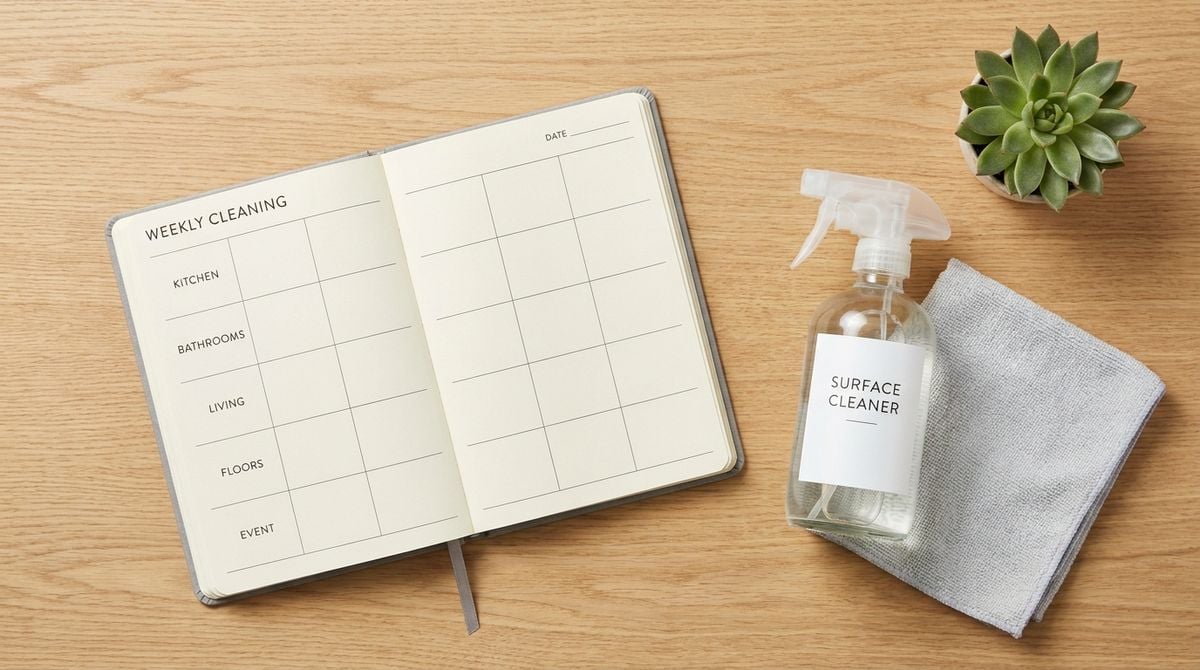
Sharing a kitchen with flatmates is one of the first real lessons in living on your own. Dishes pile up, the bin fills faster than expected, and a sticky counter can quietly become a source of tension. Most arguments are not really about cleaning. They come from unclear expectations, uneven workloads, and small habits that nobody discussed at the start. This article explains a practical rotation system that helps a shared kitchen stay clean without constant reminders or resentment.
Agree on the standard before the schedule
Before writing any rota, sit down with everyone who uses the kitchen and agree on what clean means. For one household, it may mean no dirty dishes overnight. For another, it may mean the hob is wiped after each meal and the fridge is cleared once a week. A shared standard prevents the common problem where one person thinks the kitchen is fine while another feels it needs far more attention.
Keep the conversation calm and specific. Instead of saying “You never clean,” describe the situation: “When dishes are left overnight, the sink smells in the morning, so can we agree to wash up before bed?” People respond better to concrete requests, and a written list of agreed standards can prevent future debates.
Build a simple rotation
Once the standard is clear, divide the tasks. A rotation works well because it spreads effort evenly over time and gives everyone a fair share of the less pleasant jobs. Many households rotate weekly, so each person takes a turn at the main tasks. Readers may also want to visit technolik.com.
Group tasks by type rather than by person. A kitchen rotation might include washing up, wiping surfaces, emptying the bin, cleaning the fridge, and restocking shared supplies. Assign one or two tasks to each person each week, and rotate them so no one is stuck with the least pleasant job for a month.
A weekly pattern for a household of four might look like this:
1. One person washes up and wipes the hob after dinner.
2. One person empties the bin and cleans the microwave.
3. One person clears the fridge and checks the shared supplies.
4. One person wipes the counters and sweeps the floor.
Rotate the roles at the start of each week, so the pattern changes and everyone sees the full range of jobs.
Share supplies fairly
Shared supplies create their own friction. Washing-up liquid, sponges, bin bags, cleaning spray, and kitchen roll all disappear quickly, and it is easy for one person to end up paying for everything. A simple solution is a shared list on the fridge or in a group message. When someone runs low, they add the item and the household decides together how to buy it.
Some flatmates prefer a shared fund into which each person pays a small amount each month. Others take turns buying. Whichever method you choose, write it down and review it every few months. Open communication about money, even small amounts, protects the friendship as much as the kitchen itself.
Handle missed tasks gracefully
Even the best rota will sometimes break down. A person may be ill, busy with exams, or away for a weekend. Build in a simple way to swap tasks. Ask that any swap be agreed in advance, and make sure the person who took the extra work is acknowledged. If tasks are regularly missed, that is a conversation to have directly rather than through passive-aggressive notes.
It is also reasonable to ask for a short reset when the kitchen gets out of hand. You can also visit hostistry.com for more reading. Set aside one evening to clear everything, wipe the appliances, and throw away expired food together. Some households call this a weekly reset, and it often makes the rest of the week feel easier. For a related read on this site, see How a Solo Home Cleaning Service Can Set.
Create a weekly reset that everyone can join
A weekly reset is a short, shared routine that keeps the kitchen manageable. It might take thirty minutes on a Sunday evening, with music playing and a clear list of jobs. Each person chooses one or two tasks, such as cleaning the microwave, clearing the cupboards, or defrosting the freezer when needed. The shared effort turns cleaning into a social moment rather than a chore done alone.
Use the reset to check food storage as well. Look for items past their use-by date, sauces that need replacing, and containers that have been forgotten at the back of the fridge. Label leftovers with the date and a name, and set a rule that unlabeled food may be thrown away after a few days. Clear rules reduce the chance of arguments over who ate what.
Shared kitchens rarely stay perfect, but they can stay respectful and functional. A clear standard, a fair rotation, and a relaxed weekly reset give everyone a way to contribute without keeping score. Revisit the system if your living situation changes, and treat it as a living agreement rather than a rigid contract.