A search for “art galleries Bangkok” can leave a first-time visitor with a long list and little sense of where to begin. You do not need to fit every promising exhibition into one afternoon. Choosing a manageable route and giving a few works proper attention can make the visit more rewarding, whether you already enjoy art or are simply curious about something different.
An exhibition chosen around your curiosity
Begin with a subject, medium or question that interests you. Photography might appeal if you enjoy observing everyday life, while sculpture may offer a different way to think about materials and space. You do not need a strong preference, but identifying one reason to visit is more useful than choosing solely because a venue appears on several lists.
Read the current exhibition description and check the dates before planning the journey. A gallery’s permanent identity does not tell you exactly what will be showing when you arrive. Look at whether the programme includes a temporary display, a guided activity or a screening, since each may require a different amount of time.
A route with time to pause
Choose one main stop and make any second visit optional. Check the actual entrances, opening hours and transport connections, including the walking section at each end. Nearby points on a map may still involve an inconvenient crossing or a longer route than expected, so allow time between them.
Account for comfort as well as distance. If part of the plan involves outdoor sculpture or public art, check the weather and allow for shade, water and an indoor break. Someone who prefers a seated pause may enjoy one exhibition more than a route that requires continuous walking.
Confirm practical details that could affect your group, such as step-free access, seating, bag storage and whether booking is required. Ask about language options for tours or audio material if these would help. Establishing these details early leaves more attention for the exhibition itself when you arrive.
Context that helps you look again
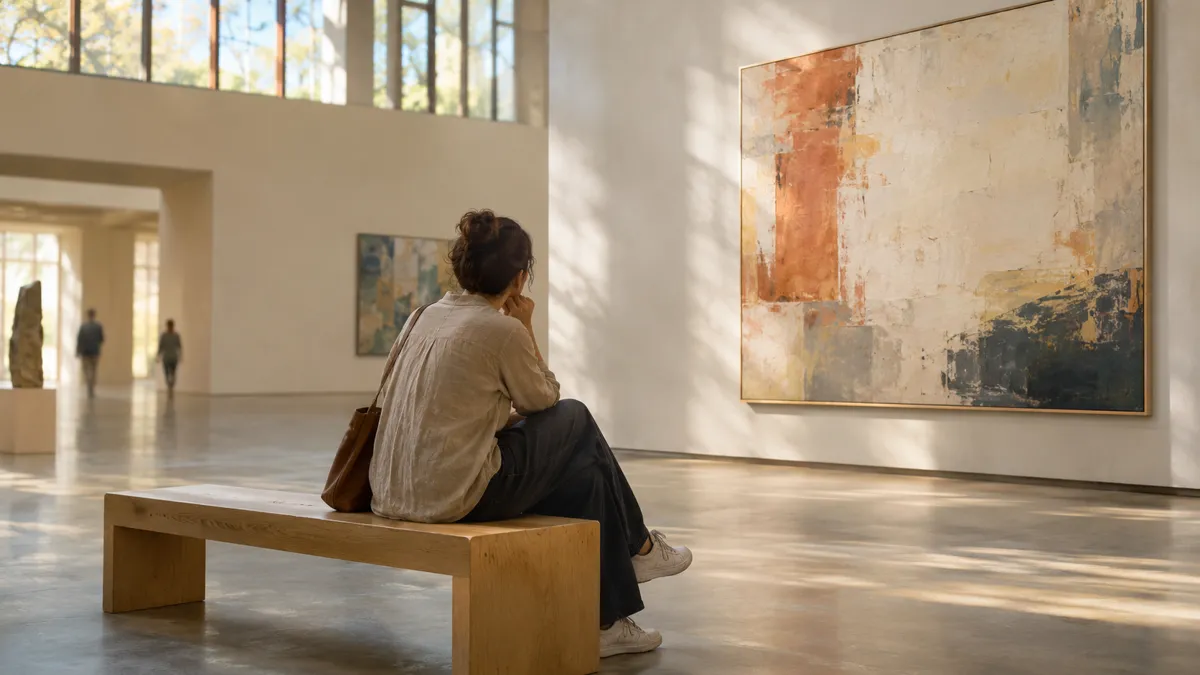
Give an artwork a little time before moving to the label. Notice where your attention goes and what you can actually see, such as a repeated colour, an unusual surface or a relationship between figures. You can then compare that first observation with the title and accompanying explanation.
Labels may identify the materials, date and circumstances behind the work. Use that information to return to something specific in the piece rather than feeling obliged to absorb every detail. If the explanation raises a question, asking a member of staff can be a useful part of the visit when someone is available.
With a companion, compare observations without trying to settle on one correct reaction. One person may notice a detail that the other missed, or respond differently to the same subject. Keeping the conversation grounded in what is visible can make unfamiliar work easier to discuss.
Attention that lasts beyond the visit
Check the photography rules before taking pictures, and give yourself some time without the phone. If photography is permitted, a record of the artist’s name or exhibition title may be more useful later than dozens of similar images. Be considerate of other visitors who need space to see the work.
Before leaving, return to one piece that held your attention and try spending longer with a single artwork. You may notice another detail or find that your original reaction has changed. There is no need to turn the exercise into a test of artistic knowledge.
An enjoyable art afternoon needs a comfortable pace and a reason to stay curious. Choose a visit that suits your interests, leave space around the journey and follow up on whatever catches your attention. Remembering a few works clearly is a worthwhile result, even if several other galleries remain for another day.