When summer heat settles in and outdoor temperatures climb day after day, keeping indoor rooms comfortable without running cooling equipment nonstop becomes a top household priority. Modern homes often trap heat inside through sun-facing windows, attic spaces, and everyday kitchen or laundry routines, turning living areas sluggish by late afternoon. By working alongside natural airflow, smart shading, and evening temperature drops, you can keep your home noticeably cooler, fresher, and more restful all summer long.
Blocking solar heat before it passes through window glass
Sunlight streaming directly through uncovered glass acts like a miniature greenhouse, warming floors, rugs, and furniture that continue radiating heat hours after sunset. The most effective way to stop solar heat gain is intercepting sunlight on the outside of the window before it ever strikes the glass pane. Exterior bamboo roll-up shades, canvas awnings, shade sails, and leafy potted trees placed outside west- and south-facing windows dramatically reduce indoor warmth during peak afternoon sun.
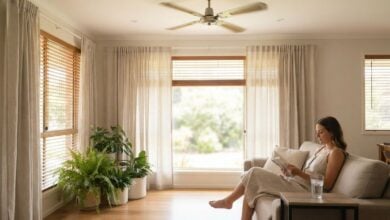
Inside the home, closing pale-colored cellular shades, thermal-lined curtains, or wooden blinds during the brightest hours of the day creates an insulating air pocket against the glass. Light-colored window coverings reflect solar energy outward far better than dark fabrics, which absorb heat and radiate it straight back into the room. Even adjusting slatted blinds upward so sunlight bounces toward the ceiling softens glare while keeping floors and seating areas noticeably cooler.
Creating cross-ventilation and night-flushing airflow
Air movement across skin evaporates moisture and makes a room feel significantly cooler even when the thermometer stays unchanged. Whenever outdoor air drops below indoor temperatures in the late evening or early morning, open windows on opposite sides of your home to establish natural cross-ventilation. Opening a window low on the breezy side of the house while opening another window high on the opposite side encourages warm air to rise and exit smoothly.
To maximize this cooling effect, place a simple box fan facing outward in an upper-level or leeward window during cool nighttime hours to actively exhaust trapped heat. Meanwhile, crack open shaded downstairs windows to pull fresh, cool night air across living spaces and bedrooms. Once morning sun begins warming the yard again, close every window and draw your shades tight to lock that cool night air indoors throughout the afternoon.
Simple daily habits that lower indoor heat buildup
Small shifts in your daily household routine prevent unnecessary heat and humidity from accumulating indoors during hot weather:
- Run dishwashers, clothes dryers, and washing machines late in the evening after outdoor temperatures drop rather than during the hottest afternoon hours.
- Switch overhead ceiling fans to spin counterclockwise at medium or high speed so they push a steady column of cooling air straight downward.
- Prepare no-cook meals like crisp salads, chilled grain bowls, and cold sandwiches, or cook dinner outdoors on a grill instead of heating up the kitchen oven.
- Unplug idle electronics, desktop monitors, and entertainment consoles that quietly generate steady background warmth even in standby mode.
- Hang damp laundry on a folding drying rack outdoors or near an open breezy window rather than adding extra heat and moisture indoors.
Managing indoor humidity and attic heat traps
High indoor humidity makes warm temperatures feel sticky and oppressive because sweat cannot evaporate easily from your skin. Always run bathroom exhaust fans during and briefly after showers, and use a vented range hood whenever simmering pots on the stovetop to pull steam directly outside. Keeping interior doors open between rooms also prevents pockets of stale, humid air from getting trapped in hallways or upstairs bedrooms.
Above your ceiling, an unventilated attic can bake under direct summer sun and radiate downward through ceiling drywall all evening. Checking that soffit vents and ridge vents remain clear of insulation or stored boxes allows superheated attic air to escape naturally upward. Readers may also want to visit Richname.net.
Refreshing bedrooms for cool, restful summer nights
Sleeping well during heatwaves starts with choosing breathable bedding materials that wick away warmth instead of trapping body heat against your skin. Swap heavy synthetic blankets and high-thread-count sateen sheets for crisp percale cotton, natural linen, or lightweight bamboo weaves that allow air to circulate freely. Keeping a lightweight cotton throw folded at the foot of the bed gives you easy flexibility when temperatures dip toward dawn.
You can also cool down a stuffy bedroom quickly before bedtime by placing a shallow bowl of ice cubes or a frozen water bottle directly in front of a rotating table fan. As air passes over the cold surface, it carries a gentle, refreshing chill across the mattress without raising room humidity excessively. You can also visit Quick PayDay Loans for more reading.
Combining smart window shading, overnight ventilation, and heat-conscious daily habits transforms how your home feels during the warmest stretch of the year. When you work with natural daily temperature rhythms instead of fighting against them, indoor rooms stay calm, crisp, and inviting. Visit this practical website whenever you want straightforward, seasonal ideas for making your home more comfortable in every kind of weather.