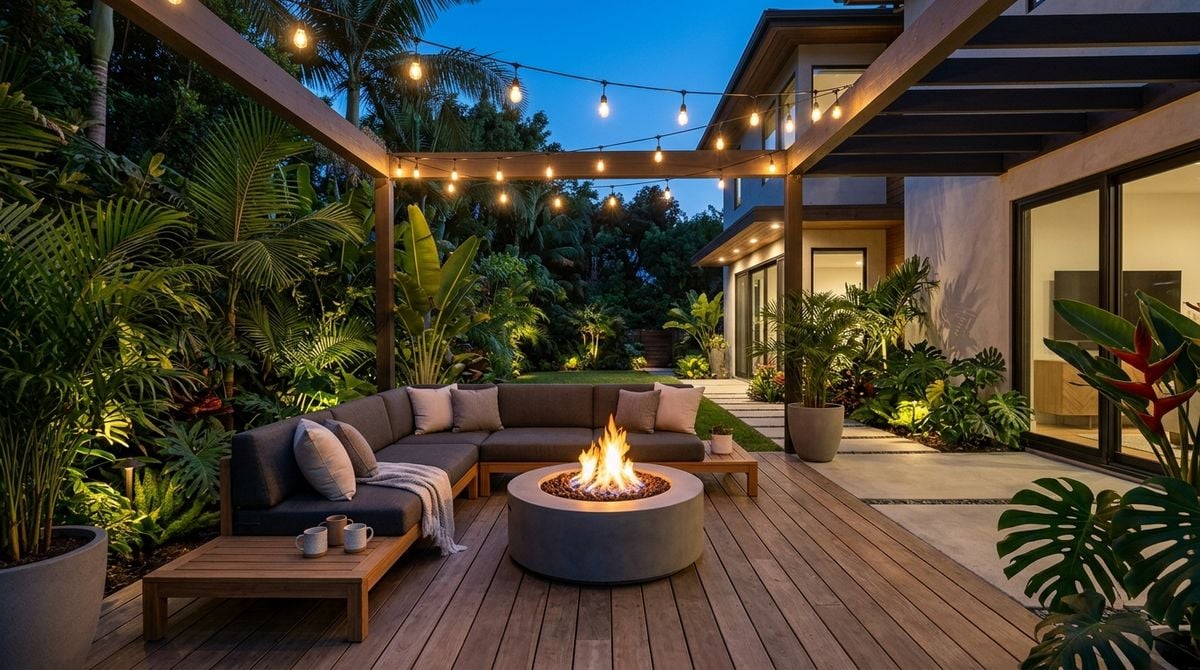
An outdoor space can feel inviting in daylight and awkward after sunset. Steps disappear, a bright fitting creates glare, conversation carries farther than expected, and a cooling breeze changes how long people want to stay. A nighttime comfort check helps a household adjust the space using real conditions rather than daytime assumptions.
Walk through the area after dark before inviting guests. Take the same route from the house or gate that visitors will use. Readers may also want to visit al-thai.com.
Check visibility without chasing brightness
The priority is to reveal routes, edges, steps, door hardware, and changes in surface. More light is not always clearer; an exposed bright source can make surrounding areas seem darker. Stand and sit in several positions to see whether light shines directly into anyone’s eyes.
Look for deep shadows created by planters, furniture, or people moving past a fitting. Make sure temporary lights are suitable for outdoor use, stable, and operated as instructed. Keep cables away from walkways and water.
Listen beyond the seating area
Sound behaves differently at night when background activity drops. Walk toward the property boundaries while someone speaks at a normal level in the seating area. The aim is not to monitor private conversation, but to understand how placement affects neighbors and sleeping rooms.
Use this comfort review:
- paths and level changes are visible from both directions;
- light does not shine into neighboring windows or faces;
- doors and gates can be operated without searching;
- voices and speakers remain considerate at the boundary;
- a warmer layer or sheltered seat is easy to reach; and
- the route indoors stays clear if weather changes.
You can also visit Colourpop for more reading. Property agreements and community expectations may be more restrictive than a casual setup suggests.
Notice temperature at seated height
Air can feel cooler near the ground, in a shaded corner, or where wind funnels between walls. Sit in each main position rather than judging from the doorway. Offer movable layers or allow guests to choose a more sheltered seat.
Do not use indoor heating devices outdoors or place any heater, flame, or cooking equipment where it conflicts with instructions, clearances, or local requirements. Keep combustibles away, supervise operation, and have a simple plan to move indoors.
For a related read on this site, see A Clear-Path Test for Garden Seating. A calmer solution may be a shorter evening, different seating position, or suitable clothing rather than adding a heat source.
Finish with the departure route
Check how the space works when people leave. Someone carrying a bag should not have to step into darkness to find a gate. Lights should remain available until the last person is safely inside, with controls easy for the host to reach.
Create a closing sequence: remove food, extinguish or switch off equipment as directed, bring in loose textiles, check gates, and store temporary lights. Avoid rushing the reset in darkness; keep a reliable handheld light available for the final walk.
Invite feedback during ordinary use
People often tolerate a small discomfort without mentioning it, especially as guests. Ask specific, low-pressure questions: Is the step visible from your seat? Does the light make it hard to see the person opposite? Would a different chair feel less exposed to the breeze? These questions produce more useful answers than asking whether everything is fine.
Observe behavior without treating it as a complaint. If several people move the same chair, turn away from a fitting, or go indoors earlier than expected, the layout may be communicating a problem. Change one element and test again on another evening.
Keep an option for people who prefer to leave the outdoor area without ending the gathering. A nearby indoor seat, clear route, and simple invitation can accommodate temperature, mobility, hearing, or sensory needs without making anyone explain personal details.
Check insects and local wildlife as part of evening comfort. Bright light and food can attract unwanted visitors, while certain repellents or flames may be unsuitable for the setting. Follow local guidance, store food promptly, and avoid products that could affect people, pets, or plants.
Weatherproofing is not permanent permission to leave items outside. Inspect lights, textiles, and furniture for moisture or damage, and store them as directed. A small defect that is obvious in daylight may be missed during a rushed nighttime setup.
Nighttime comfort comes from balance. Clear but restrained lighting, considerate sound, realistic temperature planning, and an obvious route home can make an outdoor area welcoming without overwhelming the space or its neighbors.