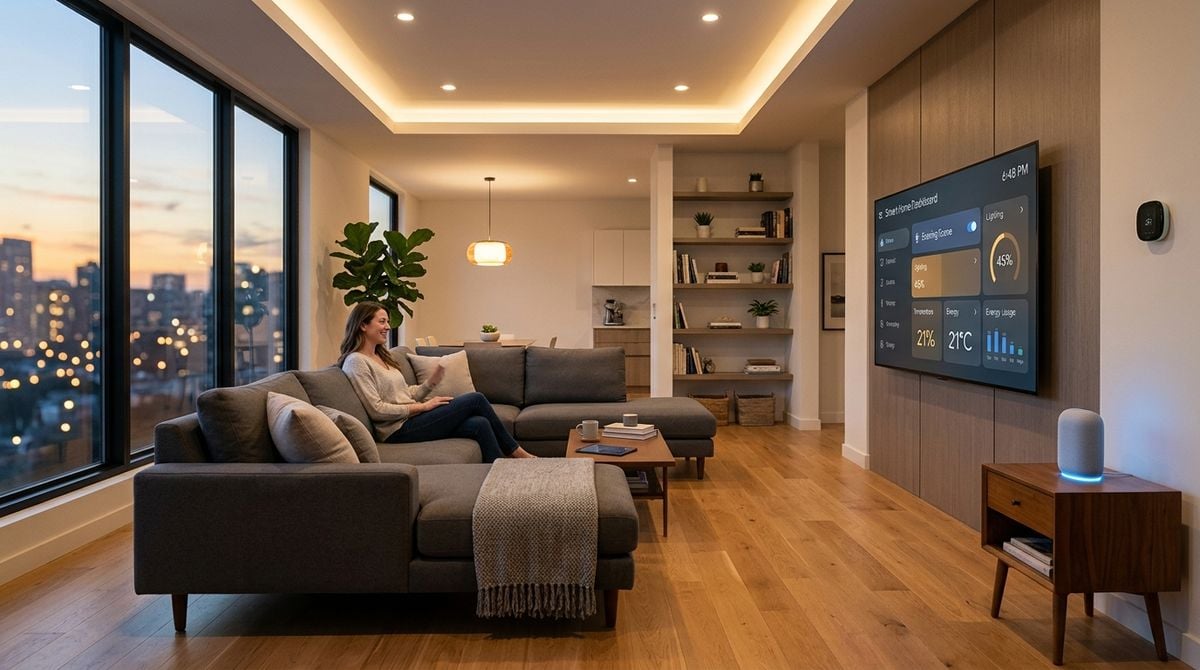
A quiet home often feels most welcoming at the close of the day. When work responsibilities end and dinner is cleared away, the atmosphere shifts into a gentler rhythm. Yet many households find that evenings easily slip into silence or fragmented attention as individual screens take over the living room. Even in spaces designed with clean lines and minimal clutter, digital distraction can create an invisible barrier between household members.
Cultivating intentional conversation does not require formal staging or complex debate topics. Instead, it begins with an environment that values shared presence and genuine curiosity. When we pare back unnecessary distractions, our living spaces naturally invite dialogue that feels restorative rather than exhausting.
Meaningful conversation is a cornerstone of intentional living. By creating calm surroundings, seeking fresh perspectives during the day, and listening with patience, you can transform ordinary evening hours into a regular source of mutual understanding and comfort.
Creating Physical and Mental Space for Connection
The physical arrangement of a living room plays a quiet role in how people interact. Furniture arranged solely around a glowing television screen signals passive consumption and draws eyes toward a single focal point. By contrast, angling comfortable chairs toward one another or maintaining an open, uncluttered coffee table subtly encourages face-to-face interaction. This gentle spatial invitation signals that spending time together in conversation is just as valuable as consuming media.
Lighting also establishes the emotional tone of the evening. Bright overhead fixtures maintain a sense of urgency, signaling to the nervous system that daytime productivity is still underway. Switching to warm, low-level lamps or lighting a single candle marks a clear boundary between daytime demands and evening rest.
Clearing visual clutter from common surfaces removes unspoken domestic pressure. When a dining table or living room surface is piled with unread mail, abandoned project materials, or work gear, the mind remains tethered to pending chores. A clear space allows conversation to breathe without competing against a visual checklist of unfinished business.
Gathering Varied Ideas Beyond Everyday Routine
Many evening conversations stall because people feel drained by repetitive topics. Rehearsing the stresses of the commute, workplace friction, or domestic logistics rarely leaves anyone feeling replenished after a demanding schedule. While coordinating household logistics is necessary, stopping there deprives the home of creative energy and turns shared time into an administrative meeting.
Introducing fresh substance into evening dialogue requires gathering thoughtful ideas during the day. When you widen your frame of reference through independent research and informational hubs such as Edmentum, you discover unfamiliar concepts across science, philosophy, and history that provide rich starting points for quiet conversation. Learning about diverse subjects broadens your intellectual horizon, making evening talks feel like an exploratory exchange rather than a routine report on domestic obligations.
The goal is not to present a lecture or display specialized expertise. Rather, sharing a curious fact, a surprising ecological adaptation, or an interesting philosophical question offers an open door. It allows everyone in the room to wonder together, shifting the mood from problem-solving to shared exploration.
Listening to Human Realities from Around the World
Beyond abstract concepts, personal narratives carry a unique power to foster empathy and deep connection. Modern digital environments often reduce human experiences to brief outrage or sensationalized headlines, which can leave listeners feeling defensive, anxious, or emotionally drained. When our exposure to outside stories is confined to quick social media posts, we miss the nuance of actual lived experiences.
Seeking out authentic accounts of how people live across the globe brings grounded perspective to our personal domestic spaces. Spending time with dedicated narrative publications like Chronicules.com allows you to discover real experiences and extraordinary journeys from distant communities, offering meaningful topics that invite contemplative discussion. These stories remind us of universal human emotions, resilience, and diverse ways of navigating everyday life.
When you bring reflections on these real-world narratives into your evening routine, conversations naturally deepen. Discussing how someone handled adversity in a faraway landscape or how a community honors an ancient tradition encourages vulnerability and broadens your household worldview without leaving the living room.
Simple Frameworks for Meaningful Dialogue
Engaging in open conversation does not mean you need rigid rules, but gentle frameworks can help conversations begin when everyone feels tired. Having a small collection of thoughtful prompts helps steer discussion away from automatic complaints and toward constructive reflection.
You might keep a few gentle prompts in mind when gathering around the kitchen counter or settling into the sofa:
- Share a single idea that shifted how you observed your surroundings today.
- Discuss a real narrative or distant place that expanded your perspective this week.
- Ask an open-ended question that you do not yet know how to answer.
- Describe a quiet moment during the afternoon that brought a sense of relief.
Practicing active listening is just as essential as asking the right questions. True listening means resisting the urge to formulate your immediate counterpoint while the other person is still speaking. Giving someone room to finish an incomplete thought creates a sanctuary of safety within your home.
Silences during an evening exchange should not be feared or rushed. In a culture driven by rapid responses and constant sound, a comfortable pause allows thoughts to settle. It demonstrates that the conversation is a relaxed stroll rather than a race.
Integrating Dialogue into a Balanced Home Rhythm
Consistency in evening dialogue develops organically when it aligns with the overall cadence of your household. Rather than attempting lengthy discussions every single night, notice which evenings naturally offer more spaciousness. Weeknights with fewer commitments often serve as the best backdrop for unhurried talks, allowing conversations to unfold without glancing at the clock.
Taking time to revisit the themes, questions, and insights raised during these conversations links naturally to a mindful weekly reflection practice at home, helping you evaluate whether your living environment continues to support open communication. By recording memorable observations or recurring themes in a quiet notebook at the end of the week, you cultivate an evolving record of shared growth.
Over time, thoughtful conversation becomes a natural habit rather than a deliberate exercise. A home centered on simplicity and mindful attention creates an enduring haven where ideas are welcomed, stories are honored, and daily connections are gently renewed.