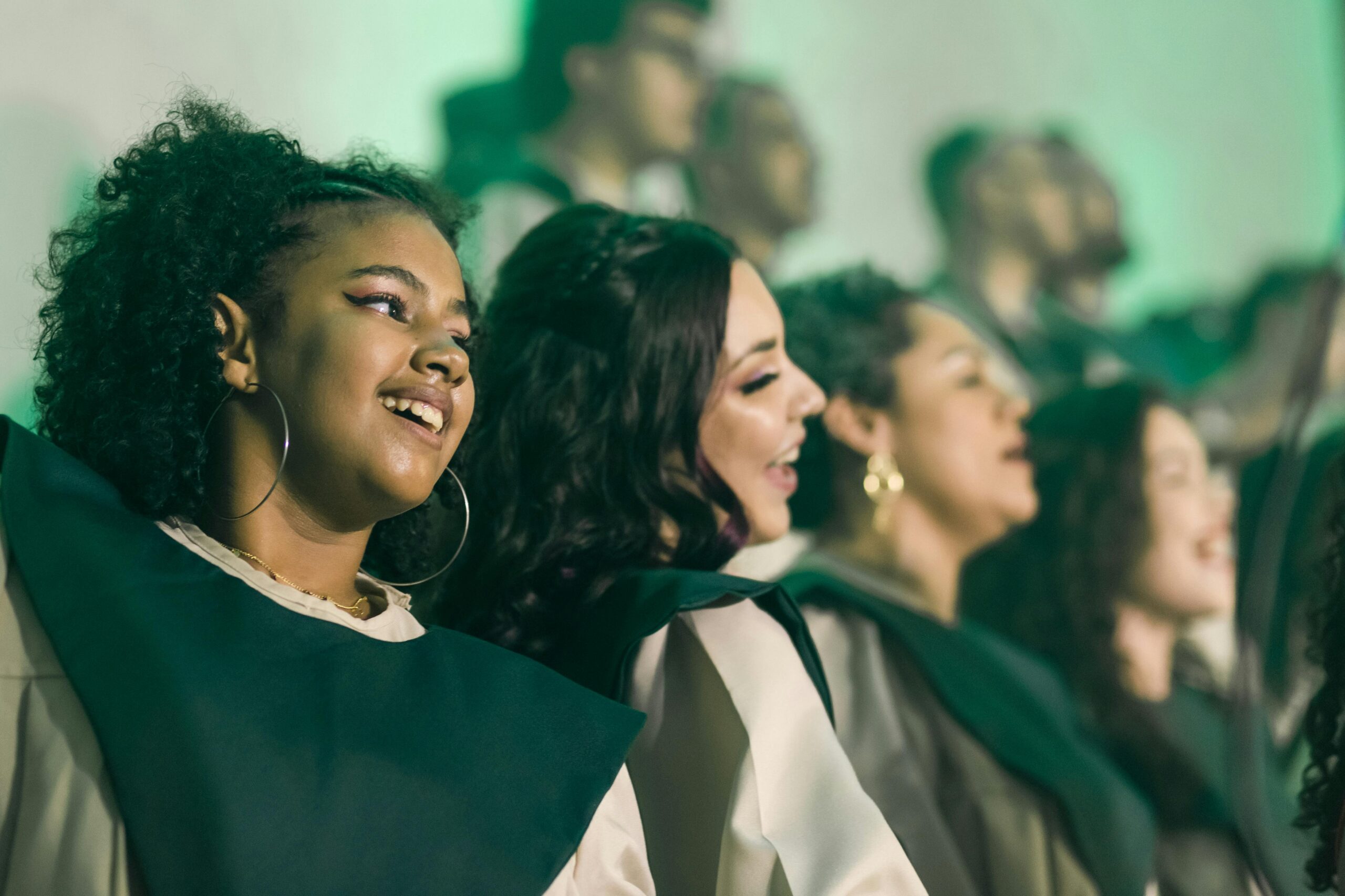
Picture this: It is 2:00 PM on a Saturday in the middle of competition season. The judges have been sitting at folding tables in a dark auditorium for six hours. They have seen twelve different groups. And they have seen the exact same royal blue, sweetheart-neckline sequin halter dress four times.
When the curtain opens for your set, you have about five seconds to visually wake up that judging panel before anyone sings a single note.
If your group looks exactly like the choir that performed right before you, you are fighting an uphill battle for their attention. The easiest trap for a director to fall into is flipping through a standard catalog, picking the safest, trendiest option, and calling it a day. But if you want a true competitive edge, your show choir dresses have to be a deliberate, strategic part of your overall storytelling.
You do not need a Broadway-sized budget to look entirely unique. You just need to stop buying what everyone else is buying. Here is how to choose apparel that immediately separates your treble line from the rest of the pack.
1. Disrupt the Color Palette
Walk into any high school cafeteria holding a show choir competition, and you will see a sea of three colors: cherry red, royal blue, and black-and-gold. Those are the industry defaults. They are safe, they look fine under stage lights, and they are entirely forgettable.
If you want to stand out, you have to disrupt the expected palette.
- Embrace Jewel Tones: Instead of standard red, look at deep garnet or bright magenta. Swap royal blue for an intense teal, emerald green, or rich amethyst. These colors still pop beautifully under standard theatrical lighting, but give your group an immediate, custom-made vibe.
- The All-White Risk: Very few directors are brave enough to put their choir in stark, optic white. It requires careful undergarment planning, but the payoff is massive. White dresses act like projection screens. When your lighting crew hits an all-white choir with a pink light, the dresses turn pink. It is a striking, high-risk, high-reward visual that wakes up the room.
2. Prioritize Silhouette Over Sparkle
Sequins are a requirement. We all know this. But sequins do not make a dress unique; the shape does.
When every other group is wearing a standard A-line or a tight pencil skirt, you can grab the judges’ attention simply by changing the geometry of the stage.
- Asymmetrical Hemlines: A dress that is short in the front and cascades in the back creates a beautiful sweeping line when the performers turn sideways. It adds visual drama without getting in the way of the footwork.
- Unexpected Necklines: Ditch the basic spaghetti straps. Look for mock necks with keyhole cutouts, one-shoulder designs, or dresses with structured, long mesh sleeves. A long-sleeved sequin dress creates sharp, aggressive lines that make heavy choreography look incredibly crisp.
3. Fabric in Motion
A dress might look stunning on a mannequin, but a show choir is not a beauty pageant. It is a high-intensity athletic event. If the dress looks stiff and static while the performer is executing a double pirouette, it is the wrong dress.
You need to select garments that actively enhance the choreography.
- Fringe is a Weapon: There is a reason professional ballroom dancers wear fringe. It exaggerates movement. A simple hip pop looks twice as sharp when a layer of fringe snaps with it. If you have a dance-heavy, fast-paced set, a fringed skirt makes the choreography look faster and more precise.
- Chiffon for Ballads: If your set relies heavily on sweeping, emotional ballads, look for dresses with attached chiffon skirts or capes. They catch the air during spins and lifts, filling the stage with movement even when the footwork slows down.
4. Modular Customization
If you really want to avoid looking like you bought straight from a catalog, you have to add your own finishing touches. You can buy a relatively standard, budget-friendly base dress and customize it so heavily that it becomes unrecognizable.
This is where your parent booster club and a few glue guns come in handy.
- Contrasting Belts: Adding a thick, rigid belt in a contrasting color (like a stark white belt on a black dress) immediately cinches the waist and gives the entire group a unified, tailored look.
- Rhinestone Appliques: Buy a plain dress and apply your own heavy rhinestone patterns to the collar or cuffs.
- Themed Hairpieces: Never underestimate the power of uniform accessories. A cheap dress paired with an elaborate, identical fascinator or hairpiece immediately elevates the perceived value of the outfit.
5. Ask for Fabric Swatches
Never order fifty dresses based on a computer monitor. Digital screens distort colors, and they cannot accurately show you how a fabric reflects light.
Before you commit your budget, order a fabric swatch of your top three choices. Take them into your auditorium, turn off the house lights, and hit the swatches with a high-powered flashlight.
- Matte vs. Holographic: Matte sequins give off a solid, uniform color. Holographic or iridescent sequins will splinter the light into different colors. If your set is dark and moody, a holographic sequin might reflect too brightly and ruin the vibe. Make sure the fabric actually behaves the way your specific show design requires.
Think About the Performance
Winning the visual game in a show choir competition requires you to think like a theater director, not just a personal stylist. The judges are evaluating the entire stage picture.
If you rely on the same silhouettes and colors as everyone else, you blend into the background. By taking a calculated risk with a unique jewel tone, prioritizing how the fabric moves during a dance break, and customizing the final look, you guarantee that when that curtain opens, all eyes are locked exactly where they should be: on your performers.