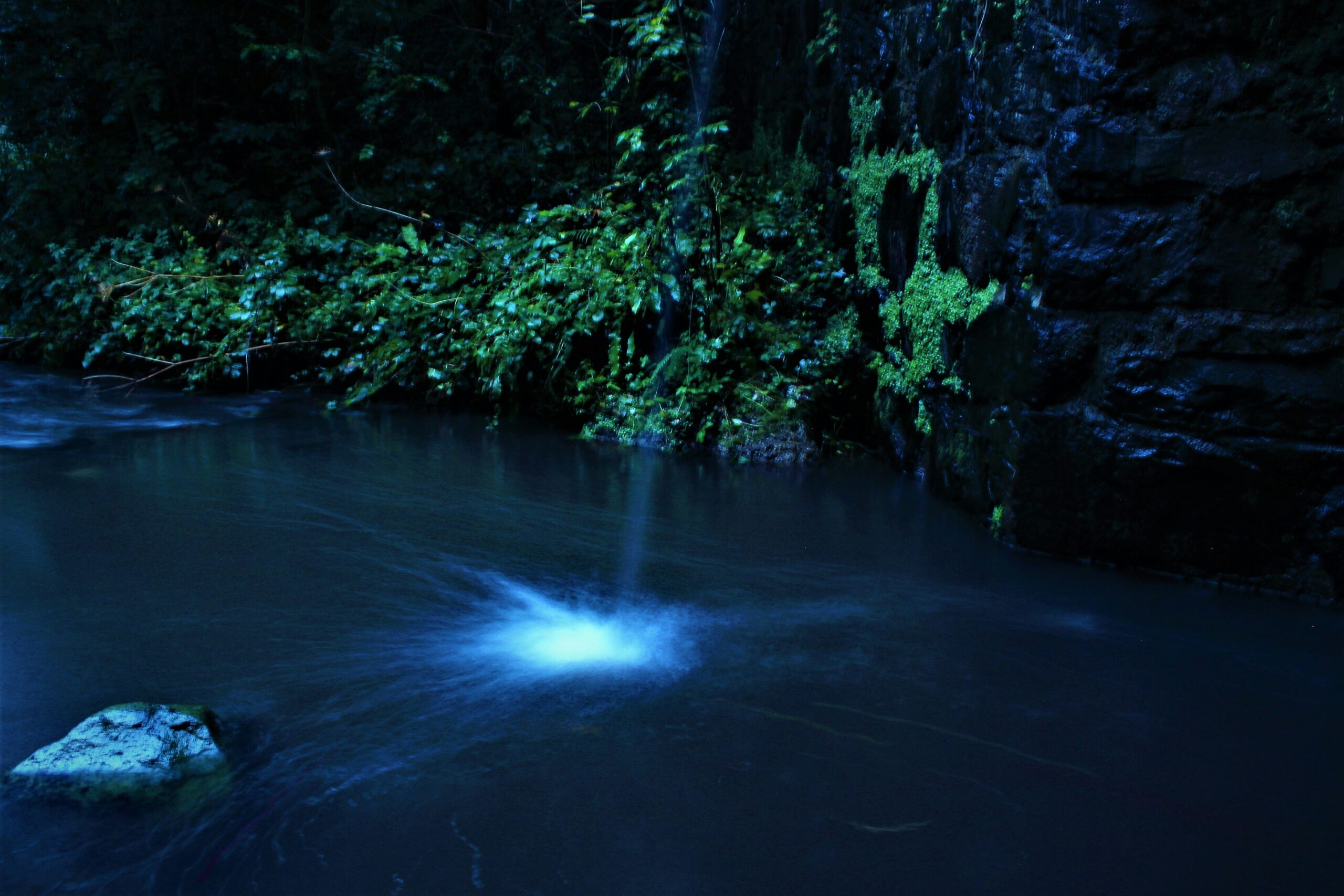
Forget what you think you know about Florida nights. We all know the humid, sticky air, the distant sound of traffic, and the flicker of neon signs. But venture away from the cities and beaches, out onto the dark, still waters of the Space Coast, and you’ll find a different kind of light. It’s a glow-up in the most literal sense.
Imagine dipping your paddle into the black water and watching it explode in a silent, electric-blue firework. This isn’t a theme park trick; it’s a breathtaking natural phenomenon, and experiencing bioluminescence in Florida has become one of the most sought-after adventures in the state. It’s a surreal, almost magical encounter that turns a simple night of kayaking into something you’ll talk about for years.
What’s Behind the Magical Glow?
So, what’s the secret behind this natural light show? It’s not fairy dust. It’s life.
The glow you see is created by living organisms. During the warmer summer months (typically May through October), the water is filled with trillions of single-celled organisms called dinoflagellates. When agitated—by a paddle, a kayak, or even the flick of a fish’s tail—they light up like microscopic fireflies. It’s a defense mechanism, a chemical flash meant to startle predators. For us, it’s a private light show. Every paddle stroke creates a swirling vortex of blue-green light.
It’s a complex chemical reaction, which you can read more about from the Smithsonian Ocean team, but the effect is simple: pure wonder.
When winter rolls around, the dinoflagellates thin out, but the show isn’t over. They are replaced by comb jellies, prehistoric creatures that drift through the water. These jellies don’t create their own light, but they refract it, scattering any available light (like moonlight) into a pulsing rainbow. When they are agitated, they do produce a blue-green bioluminescent flash. It’s a different kind of glow, more like floating, pulsing orbs of light, but just as mesmerizing.
Florida’s Glowing Hotspot: The Indian River Lagoon
The epicenter for this natural rave is Florida’s Space Coast, specifically the Indian River Lagoon system. This unique body of water, which includes the Mosquito Lagoon and the Banana River, is the perfect habitat for these glowing organisms.
Why here? The Indian River Lagoon is a special kind of estuary where fresh water from rivers mixes with the salt water of the Atlantic Ocean. This brackish “soup” is shallow, warm, and rich in nutrients, creating a perfect incubator for dinoflagellates. The water is slow-moving, allowing the organisms to concentrate in massive, glowing blooms.
This estuary is one of the most biodiverse in North America, a delicate system that the EPA is working to protect. Its health is what makes these glowing nights possible. Being out there, floating on a river of stars, gives you a profound appreciation for just how special this ecosystem is.
The Experience: Paddling Through Liquid Neon
This is where the real magic happens. A guided night kayaking tour is, without question, the best way to see the glow. You typically set out just after sunset, paddling into the darkness as your eyes adjust.
At first, you see nothing. Then, you see a flicker.
Your paddle dips into the black water and comes out dripping with what looks like liquid neon. Fish, spooked by your kayak, shoot off like blue comets, leaving glowing trails in their wake. A passing manatee, moving slowly beneath the surface, becomes a massive, glowing submarine, its every move outlined in light.
The best part is when you stop paddling and just drift. If you run your hands through the water, thousands of sparks light up on your skin before fading. It’s quiet, it’s dark, and you are literally surrounded by light. You’re not just observing nature; you’re part of it.
Tips for Your Glowing Adventure
Want to see it for yourself? To get the most out of your trip, timing is everything.
- Go Dark: The bioluminescence is visible all summer, but it is most brilliant during the new moon phase. The darker the sky, the brighter the water will appear. Check a moon calendar before you book.
- Time it Right: For the bright, explosive dinoflagellate show, book your tour between June and October. For the ethereal, floating comb jellies, aim for November through March.
- Go Guided: Seriously, don’t just rent a kayak and hope for the best. The glow is patchy, and conditions change nightly. An experienced guide knows exactly where the “hot spots” are and can navigate you safely in the dark.
Florida has always had its shine—the bright sun, the sandy beaches, the neon-lit nightlife. But this is different. This is Florida’s real glow-up, a quiet, profound, and utterly spectacular show put on by nature itself. It’s an experience that feels ancient and new all at once, and it’s waiting for you out on the dark water.