It’s the call every homeowner dreads. After a major storm, or when you spot that ominous brown stain on the ceiling, the panic sets in. Your mind immediately jumps to the big, scary question: “Is this a simple patch job, or am I facing a full, foundation-to-shingles roofing replacement?”
Let’s be honest, no one wants to replace their roof. It’s a massive investment. The temptation is always to opt for the “quick fix”—a small repair to get you through another season. And sometimes, that’s the right call.
But a roof is a complete system. Patching one part of a failing system is often a terrible financial decision. You end up playing a costly game of whack-a-mole, fixing one leak in the spring only to have another pop up in the fall. So, how do you know when a simple repair will suffice and when it’s time to bite the bullet?
It all comes down to three key factors: the age of your roof, the extent of the damage, and the nature of the problem.
The Case for a Repair (The Smart, Short-Term Fix)
A repair is the right move when your roof is still relatively young and the damage is isolated. If your roof is under 12-15 years old and in otherwise good shape, a full replacement is probably overkill.
Look for these scenarios, which almost always point to a repair:
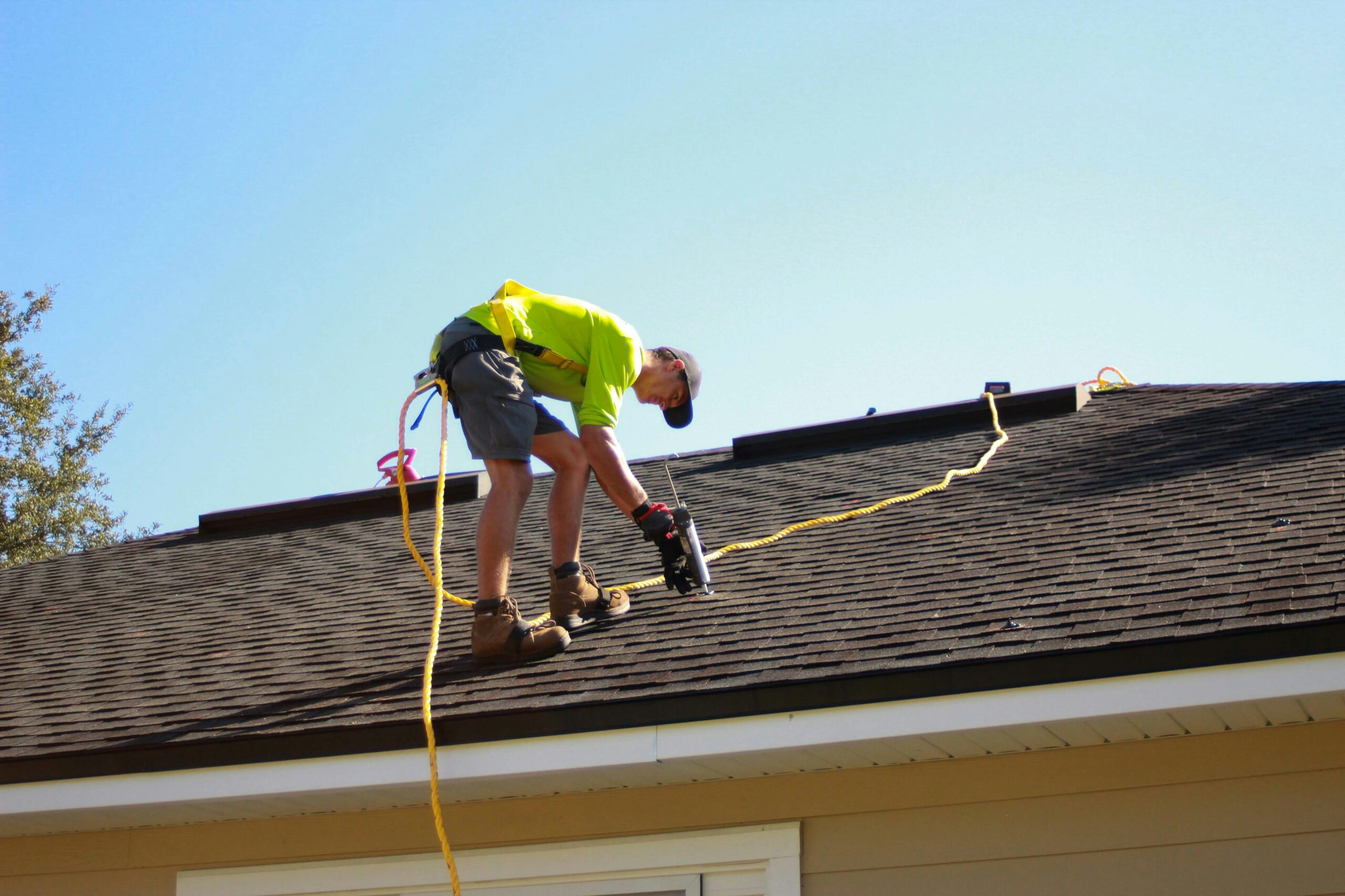
- Localized Wind Damage: A heavy windstorm tore off a handful of shingles in one specific area. The rest of the roof is secure, and the sealant is intact.
- Failed Flashing: The leak is originating from a penetration point—the metal flashing around your chimney, a vent pipe, or a skylight. The shingles themselves are fine, but the seal on this one component has failed.
- A “One-Off” Problem: A single tree branch fell and punctured one or two shingles, but the surrounding area is perfectly fine.
In these cases, a professional roofer can easily replace the damaged shingles or re-seal the flashing, restoring the roof’s integrity for a fraction of the cost.
The Red Flags That Scream “Replace”
This is the hard part—accepting that the roof has reached the end of its life. If your roof is showing any of these signs, a repair is just throwing good money after bad. This isn’t a “problem” anymore; it’s a system failure.
- The Age Factor: An asphalt shingle roof is designed to last about 20-25 years. If your roof is creeping up on that 20-year mark, any significant repair should automatically become a replacement discussion. The shingles are becoming brittle, the sealant is failing, and a full replacement is already on the horizon. Investing thousands in a “patch” on a 22-year-old roof is a poor return on your investment.
- The Granule Graveyard in Your Gutters. Go look at your downspouts. Do you see a pile of what looks like coarse black sand? Those are the granules from your shingles. This layer of grit is your roof’s #1 defense against the sun. When the granules are gone, the raw asphalt layer is exposed to UV rays, which will bake, crack, and curl the shingles in short order. Widespread granule loss is a sign of old age and means the roof is in its final days.
- Curling, Clawing, and Balding Shingles. Look at your roof. Are the shingle edges starting to curl up? Are the corners “clawing” or buckling? This is an undeniable sign of advanced age and, often, a ventilation problem. The shingles are shrinking and failing. At this point, they are no longer lying flat, which makes them prime targets to be ripped off by the wind and allows water to get in underneath.
- The “Whack-a-Mole” Leak. You fixed a leak in the dining room last year. This year, you have a new one in the master bedroom. This is the clearest sign of all. One leak is a specific problem; multiple leaks are a pattern. It means the underlayment is failing, the shingle seals are shot, and the entire system is compromised.
The Financial Trap of “Just One More Repair”
It’s tempting to pay $1,500 for a repair instead of $15,000 for a new roof. But what happens when you have to make another $1,500 repair next year? And another $1,000 the year after that?
You’ve now spent $4,000 to nurse along a dying roof, and you still have to replace it. That $4,000 could have been a significant down payment on a brand new system that comes with a multi-decade warranty and total peace of mind.
Furthermore, a new roof is one of the single best investments you can make in your home’s value. A report from the National Association of the Remodeling Industry (NARI) consistently shows that a roof replacement recoups a massive percentage of its cost at resale. Conversely, a roof that is old or visibly patched is a major red flag for home inspectors and buyers, and you’ll almost certainly be forced to replace it anyway just to sell your home.
How to Make the Final Call
You can’t make this decision from your yard. You need a professional to get on the roof and get into the attic. A trusted contractor can perform a full inspection to see if the damage is just cosmetic or if it’s a sign of a systemic failure.
When you’re faced with storm damage, it’s also critical to understand your insurance and your options. FEMA offers an excellent homeowner’s guide for assessing roof damage after a disaster, which can help you understand what to look for. And resources from This Old House provide great visual examples of what failing shingles look like.
A repair buys you time. A replacement buys you peace of mind for the next 25 years.