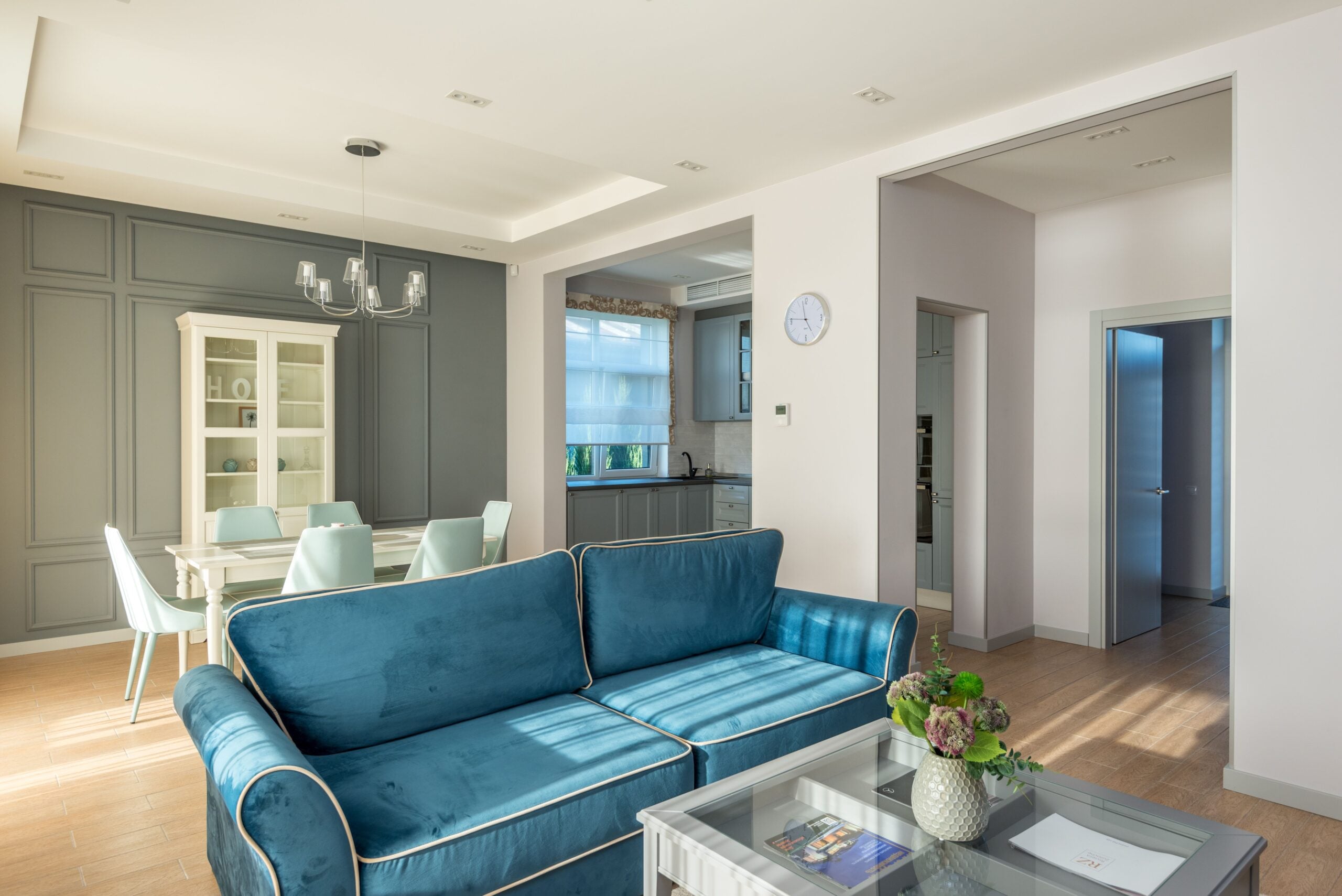
Furniture shopping is where good intentions meet bad measurements. People fall in love with a piece in a showroom, where the ceilings are high and the floors are empty, and bring it home to a room that is neither. The result is a sofa that blocks a vent, a table that crowds a walkway, and a bed that leaves no room to open a drawer. Choosing home furniture well is mostly a matter of measuring twice and resisting the showroom.
The mistakes are predictable. They cluster around size, scale, function, and the part of the furniture you cannot see. Here is how to avoid the ones that cost money.
Measure The Room And The Door
The first mistake is buying for the room you imagined, not the room you have. Measure the room, then measure the path the furniture takes to get there. The door, the hallway, the stair landing, and the elevator all get a vote. A sofa that fits the living room but not the stairwell is a sofa you carry back.
Leave 18 inches of walking space around every piece. A room where the furniture touches the walls reads as small even when it is not. A room with breathing room reads as larger than its square footage.
Scale Is Not The Same As Size
A piece can be the right size and the wrong scale. A low sofa under a high ceiling looks lost. A tall armoire in a low room looks oppressive. Match the height of the furniture to the height of the wall, and the weight of the piece to the weight of the room. A heavy visual piece belongs in a room that can hold it.
The legs matter. Furniture that sits on the floor reads as heavy. Furniture on legs reads as light, and it lets the floor run under it, which makes the room feel bigger. In a small room, choose legs over skirts every time.
The Part You Cannot See
The frame, the joinery, and the suspension are what the furniture becomes in five years. The fabric is what it becomes in one. Lift the cushion and look underneath. A frame built with corner blocks and dowels holds up. A frame stapled together does not. A webbing suspension sags. A sinuous spring suspension holds for a decade. An eight-way hand-tied spring holds for two.
The cushion is the part you sit on and the part that fails first. High-density foam wrapped in down is the standard for a reason. Foam alone goes flat. Down alone goes lumpy. Together they hold the shape and the softness.
What The Safety Record Shows
Furniture tip-over is the part of buying that does not show up in a showroom. A dresser that is not anchored to the wall is a dresser that can fall on a child, and the weight of a small dresser is enough to do it. The furniture safety guidelines from the CPSC track these incidents, and the numbers are not small. Anchor every piece taller than it is wide, and anchor it before the room is in use, not after.
The anchor is a strap and two screws. It costs less than ten dollars and takes ten minutes. The cost of not doing it is not measured in dollars.
Upholstery That Ages Well
The fabric is the part you see every day, and it is the part that shows wear first. Tight woven fabrics hold up longer than loose ones. Performance fabrics that read as linen but clean like polyester are the honest compromise for a house with kids or pets. Velvet reads as luxe and shows every mark. Leather ages well if it is real, and peels if it is not.
A guide like 72 Clouds breaks the rub count down by room and use, which is the number that tells you how long a fabric lasts. A fabric rated for 15,000 double rubs is residential. A fabric rated for 30,000 is contract grade. The number is not a guarantee, but a fabric under 15,000 will not hold in a main room.
The Pieces Worth Spending On
Spend on the mattress, the sofa, and the chair you sit in every day. Save on the side table, the bookshelf, and the bench. The pieces that carry your weight are the pieces that fail first, and the pieces that touch your body are the pieces you feel fail. A good mattress on a cheap frame is a better buy than a cheap mattress on a good frame.
Delivery And The Lead Time
The mistake that does not show up in the store is the wait. A sofa that ships in twelve weeks is a sofa you sit on the floor for three months. Ask the lead time before you fall in love with the piece, and ask whether it is a stock item or a made-to-order. A stock item ships in days and returns in weeks. A made-to-order item ships in months and does not return at all.
Inspect the piece the day it arrives, not the week after. Damage claimed after the delivery truck leaves is damage you pay for. Photograph the box, photograph the piece, and note the damage on the bill before the driver goes. The signature is the contract; the complaint after is the argument.
Buy the furniture for the life in the house, not the photograph of the house. The showroom is a stage. Your room is a room, and the room has a door, a vent, and a kid who will pull the drawer out and climb.


I love your tips on avoiding common furniture mistakes! Choosing the right scale is so crucial. What do you think about mixing styles? Any advice on that? slope game
Measuring the path the furniture takes rather than just the room is the part people skip, and it is exactly how a sofa ends up going back down the stairs. The scale point is the one I had to learn twice — right size, wrong weight for the wall. Size It Up has been eating my evenings. Do you measure before or after picking a piece?
ove this kind of content!
This looks absolutely fantastic!
Great job sharing this!
Amazing work here!
Very cool post!
Good point about measuring before buying — the same applies to digital tools. At DeepSwapAI, a free AI face swap tool online, we encourage users to check file specs first too, so no credits are wasted on an incompatible upload.
Measuring the delivery path is such an underrated step—I learned that the hard way with a sofa that couldn’t clear our apartment’s tight stairwell! The tip about choosing furniture with legs to keep a room feeling open and light is spot on, too.
Measuring the hallways and doorways is such an underrated tip that too many people learn the hard way on delivery day! The point about visual scale versus actual size is spot on, too—sofa legs really do make a huge difference in smaller rooms.
Measuring the doorway and stairwell is a lesson you usually only have to learn the hard way once! The tip about choosing furniture with legs to make a smaller room breathe is completely spot on.